| Cruise Region : Europe, Mediterranean Sea |
| Company : Azamara Cruises |
| Ship : Azamara Onward |
| Journey Start : Wed 16 Aug 2028 |
| Journey End : Sun 27 Aug 2028 |
| Count Nights : 11 nights |
| Day | Date | Port | Arrival | Departure |
|---|---|---|---|---|
| 1 | 16.08 Wed | Venice / Italy | 18:00 | |
| 2 | 17.08 Thu | Dill / Slovenia | 08:00 | 20:00 |
| 3 | 18.08 Fri | Zadar / Croatia | 09:00 | 20:00 |
| 4 | 19.08 Sat | Split / Croatia | 08:00 | 22:00 |
| 5 | 20.08 Sun | Dubrovnik / Croatia | 08:00 | 20:00 |
| 6 | 21.08 Mon | Day at sea / Sea | 15:00 | |
| 7 | 22.08 Tue | Chania (Souda), Crete / Greece | 08:00 | 20:00 |
| 8 | 23.08 Wed | Syros / Greece | 08:00 | 22:00 |
| 9 | 24.08 Thu | Mykonos / Greece | 08:00 | 20:00 |
| 10 | 25.08 Fri | Kusadasi (Ephesus) / Turkey | 08:00 | 22:00 |
| 11 | 26.08 Sat | Patmos / Greece | 08:00 | 18:00 |
| 12 | 27.08 Sun | Piraeus (Athens) / Greece | 05:00 |
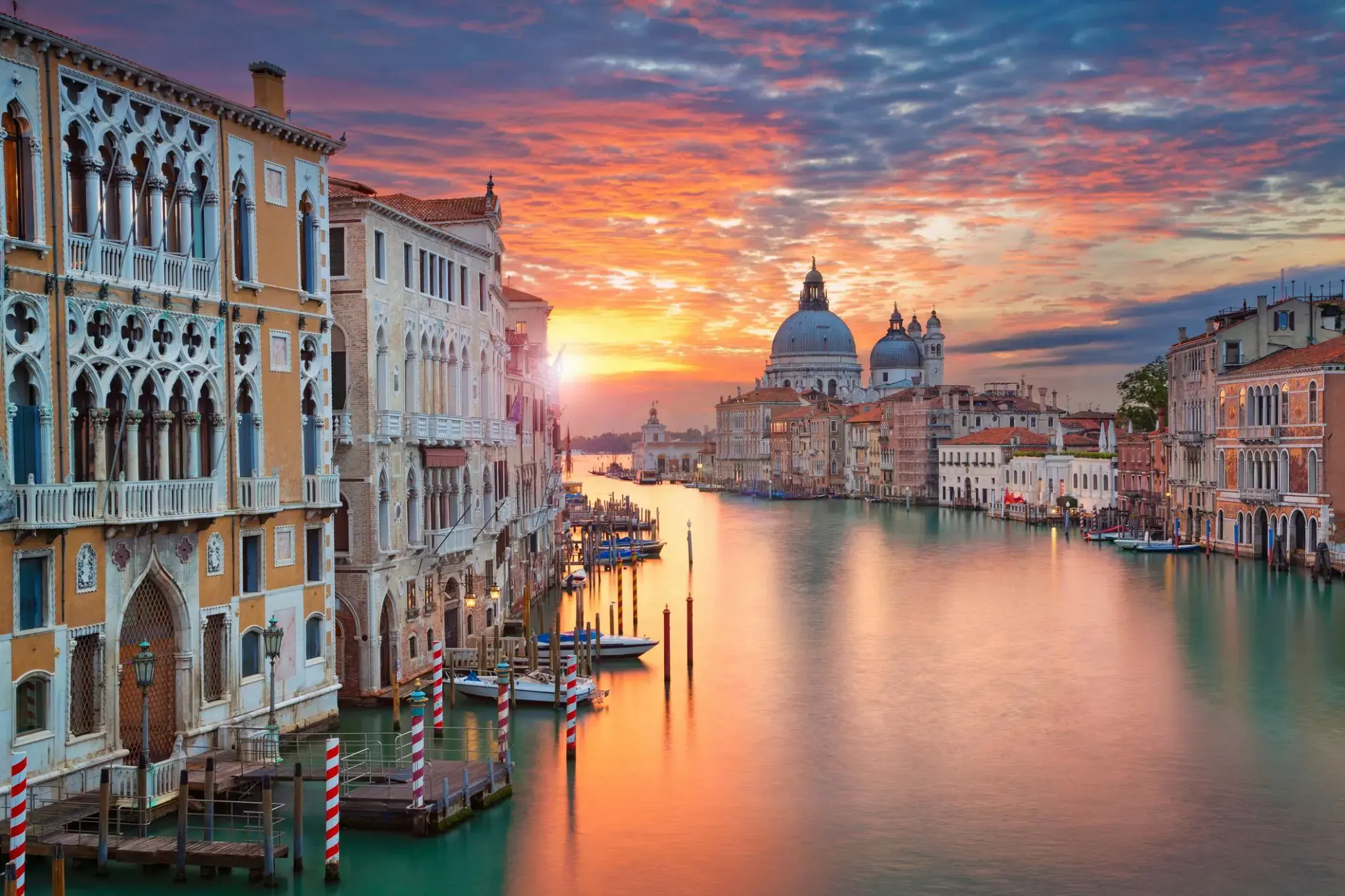
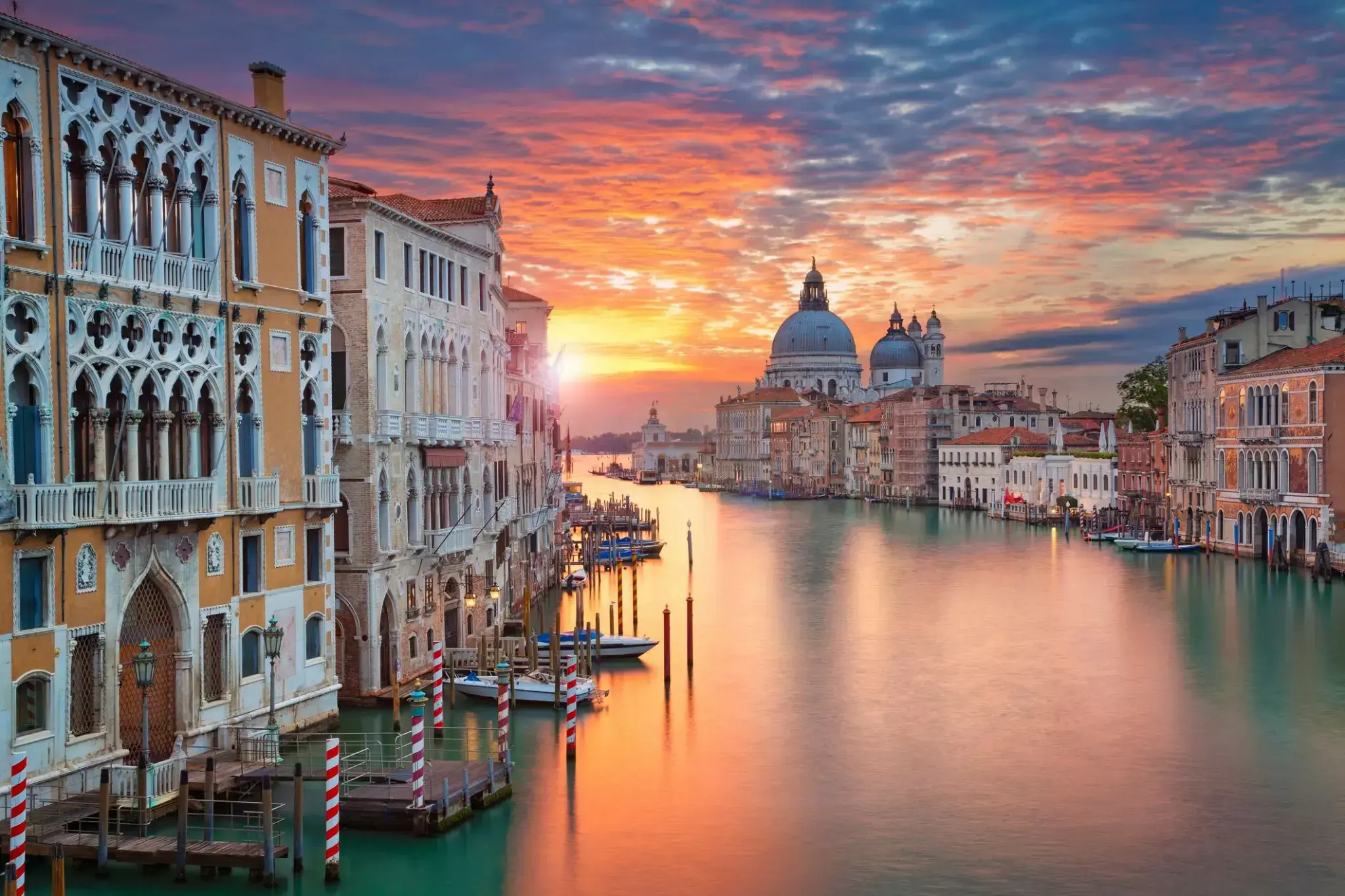
Venice is the most famous and unusual city in the world. It is located in northern Italy on the Adriatic coast. The territory of the city is cut by more than 150 canals and ducts through which more than 400 bridges are thrown.
Venice is a resort city, which is a center of international tourism of world significance, a venue for art and architectural exhibitions, international film festivals. Absolutely unusual atmosphere reigning in the city falls in love with itself at first sight. Narrow streets, with small cozy cafes, sliding gondolas and serenades of gondoliers, set in a romantic mood, and attract lovers from all over the world.

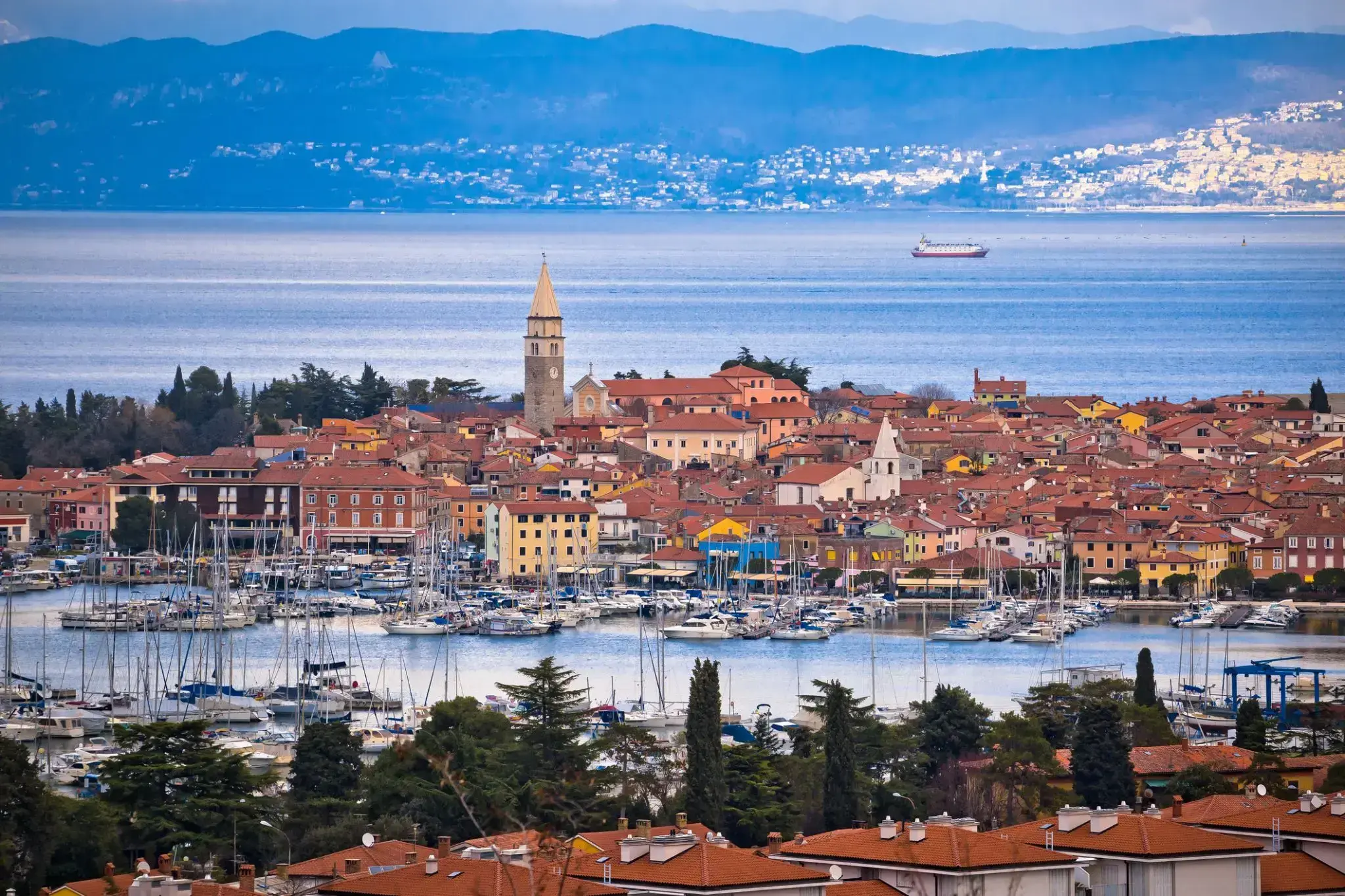
Koper is the fifth largest city in Slovenia. Located in the southwestern part of the country, approximately five kilometres (3.1 miles) south of the border with Italy and 20 kilometers (12 miles) from Trieste, Koper is the largest coastal city in the country. It is bordered by the satellite towns of Izola and Ankaran, and anchors the Istrian region. With a unique ecology and biodiversity, it is considered an important national natural resource. It is the oldest recorded urban settlement in Slovenia. The city's Port of Koper is the major contributor to the economy of the eponymous city municipality. With only one percent of Slovenia having a coastline, the influence that the Port of Koper also has on tourism was a factor in Ankaran deciding to leave the municipality in a referendum in 2011 to establish its own. The city is a destination on a number of Mediterranean cruising lines. In 2016, the city expects 65 cruise ship arrivals (for example: Norwegian Spirit, MSC Magnifica, Norwegian Jade, MS Rhapsody of the Seas...) with the season spanning from March to December. Koper is the main urban centre of the Slovenian Istria, with a population of about 25,000.
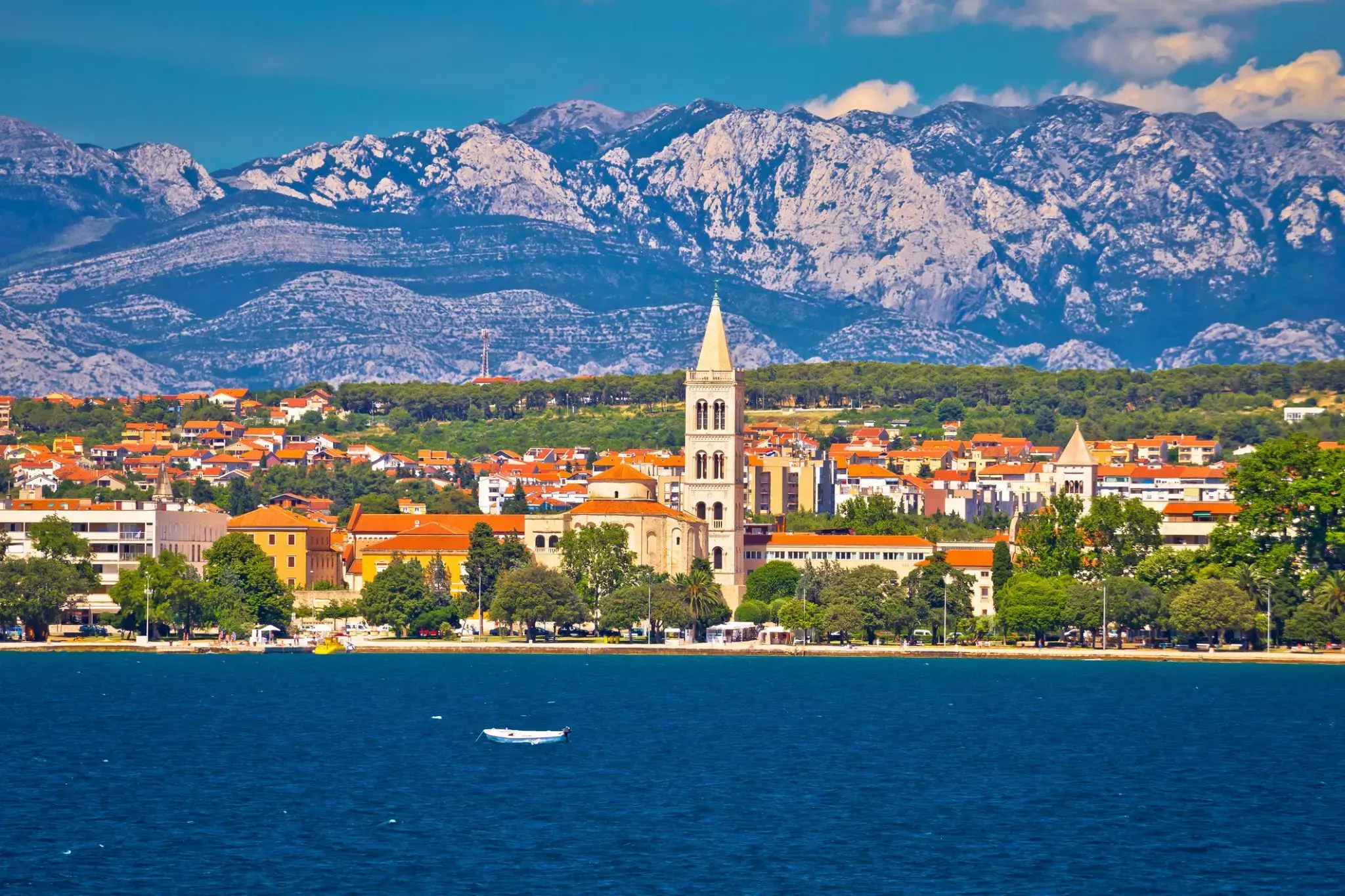
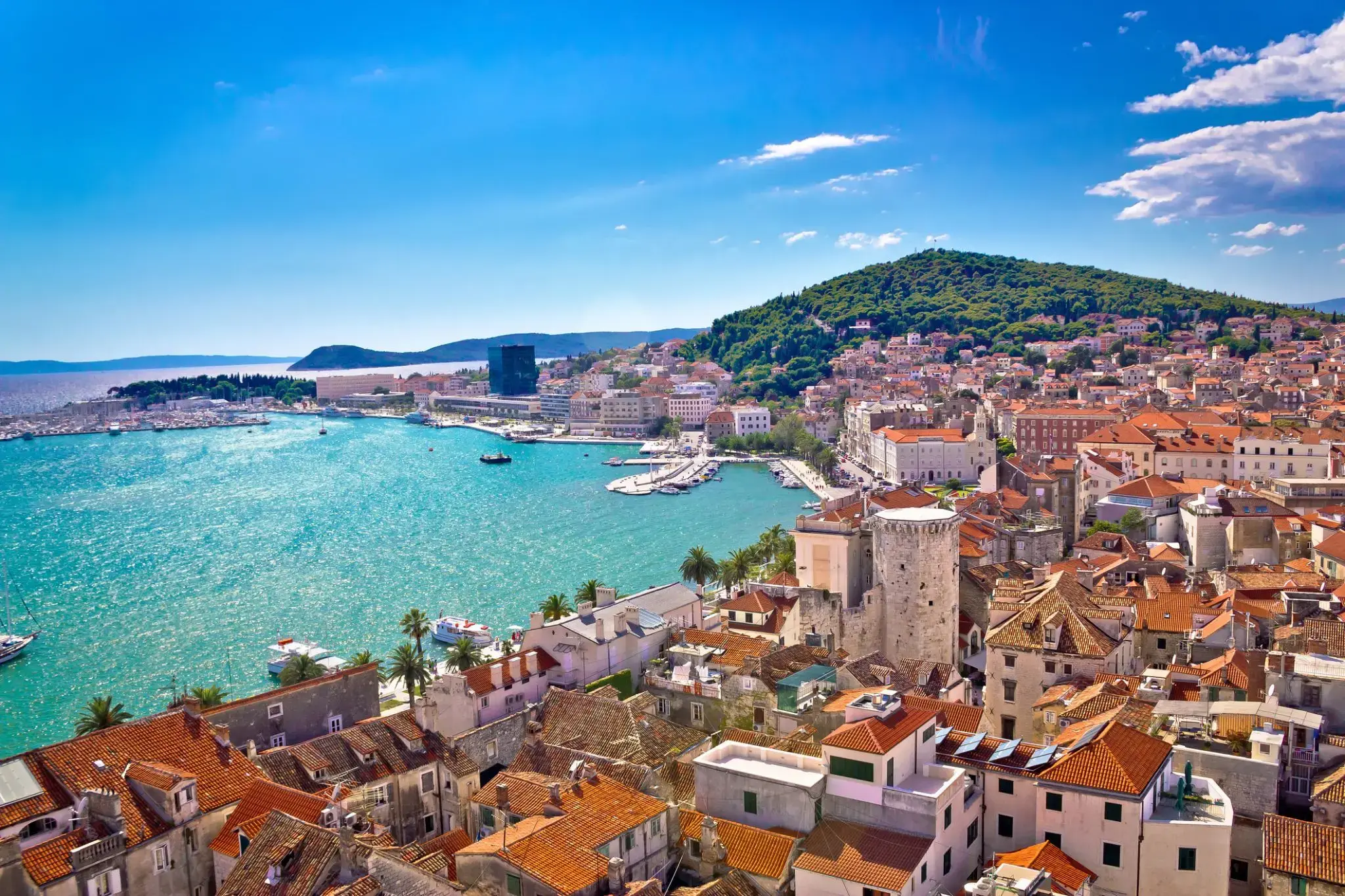
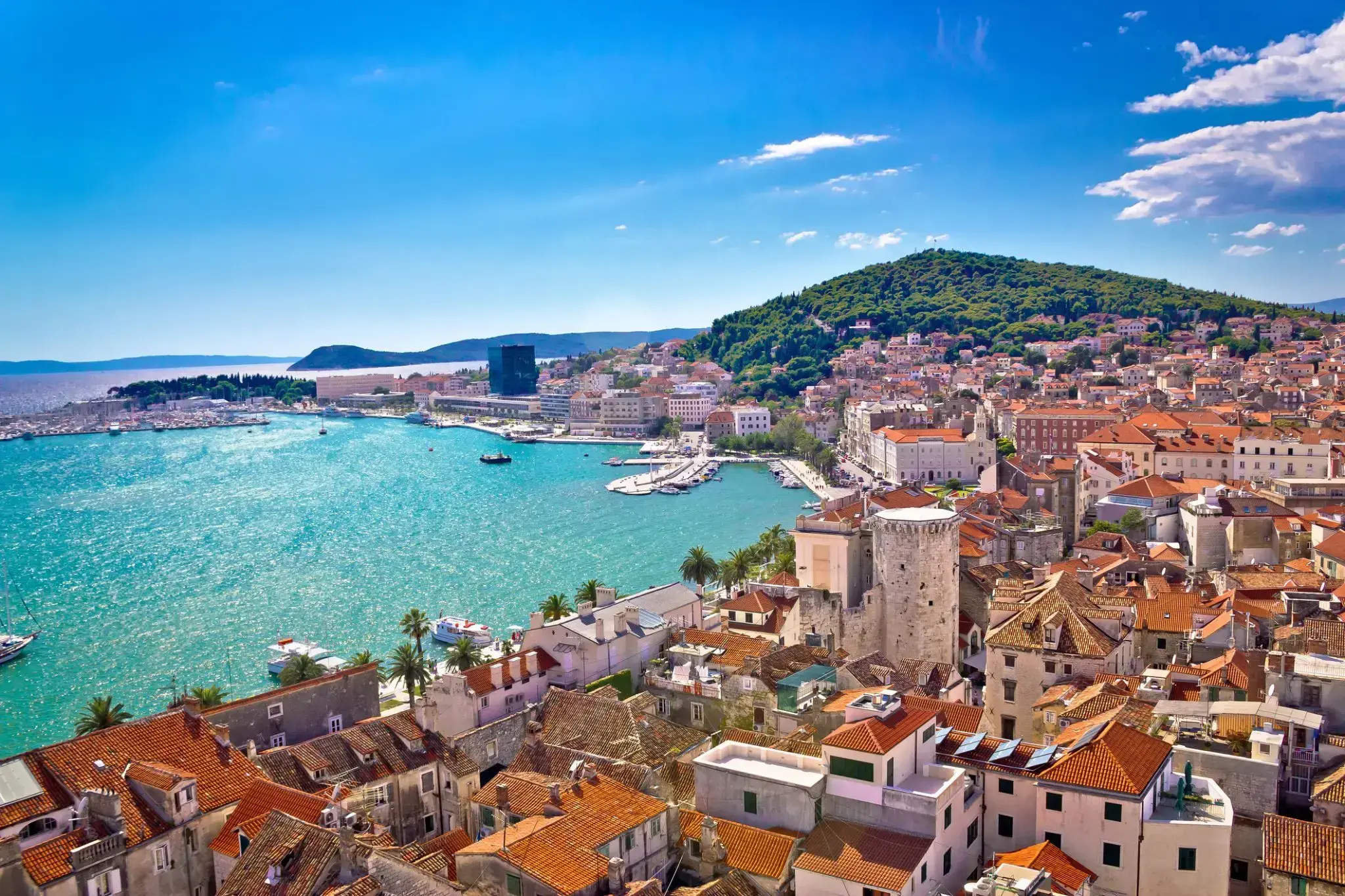
Split – the Pearl of Dalmatia
Split is Croatia’s second-largest city on the Adriatic coast. Its landmark is the Diocletian’s Palace, a UNESCO site, surrounded by narrow streets and the Cathedral of St. Domnius.
Life pulses along the Riva promenade, lined with cafés and restaurants. Nearby are beaches, including the famous Bacvice.
Split is also an important port, offering easy access to Croatian islands such as Hvar, Brač and Korčula. Its Mediterranean atmosphere and Dalmatian cuisine make it a perfect holiday destination.
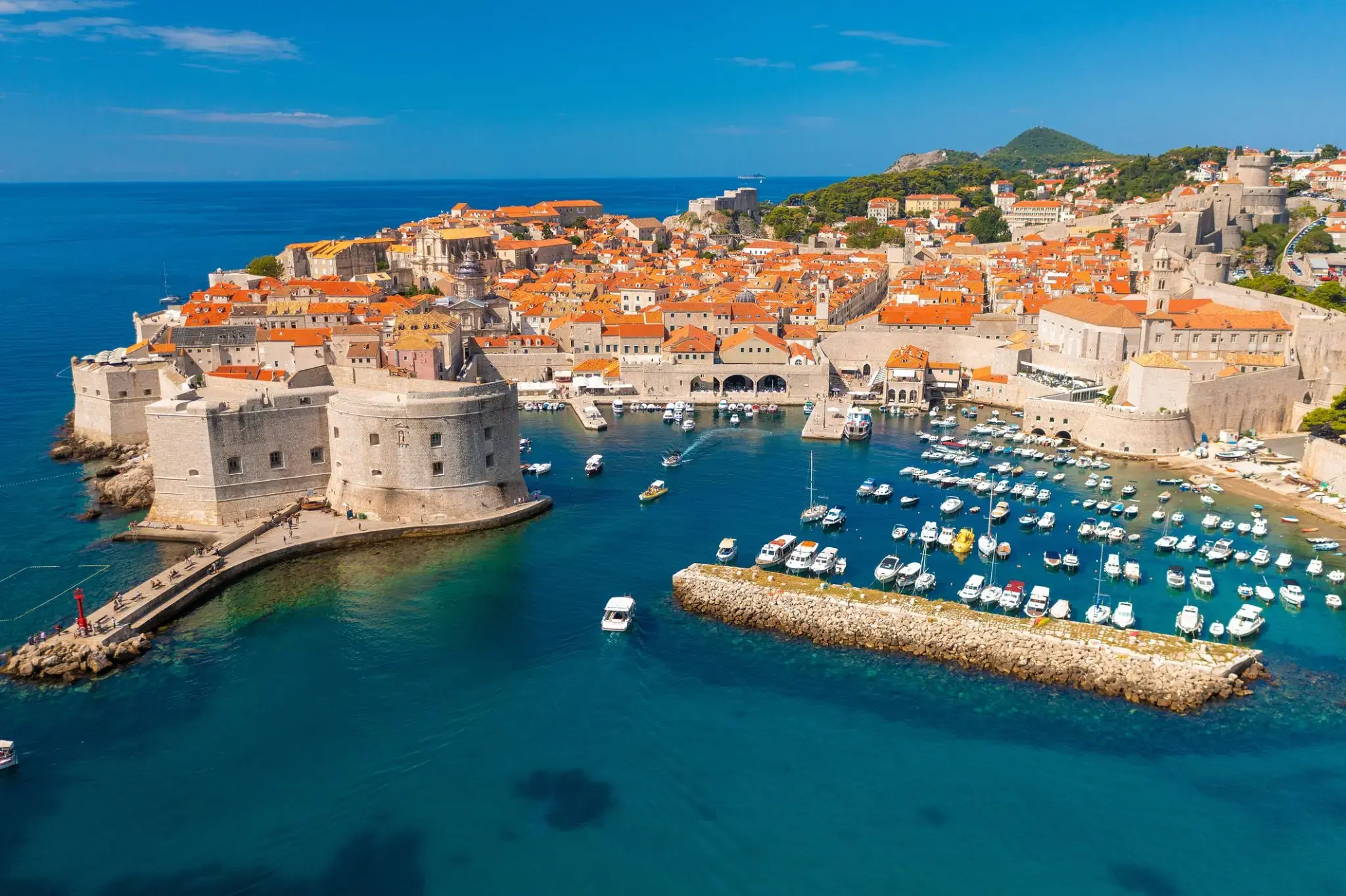
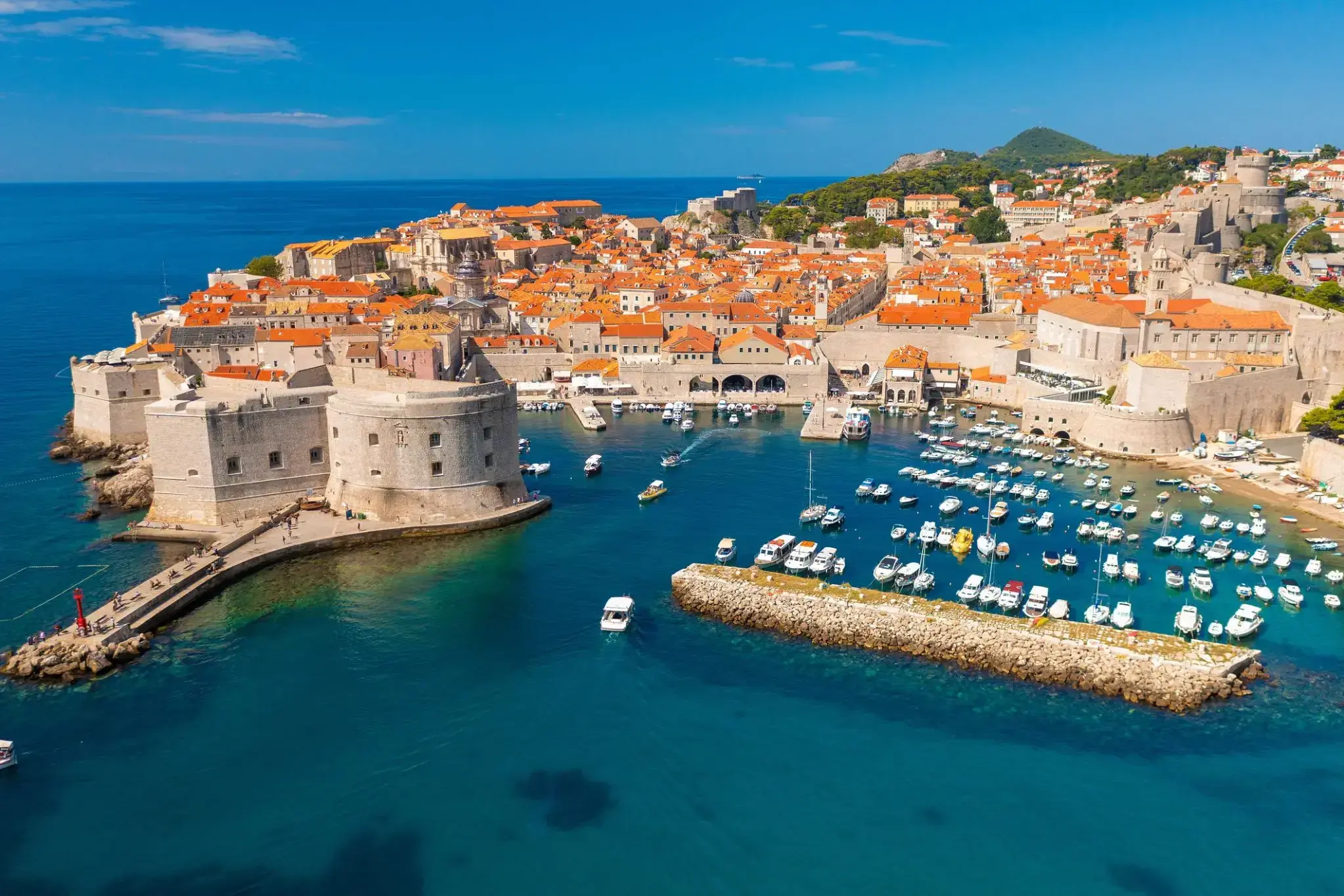
Dubrovnik is a Croatian city on the Adriatic Sea. It is one of the most prominent tourist destinations in the Mediterranean Sea, a seaport and the centre of Dubrovnik-Neretva County. Its total population is 42,615 (census 2011). In 1979, the city of Dubrovnik joined the UNESCO list of World Heritage sites.
The prosperity of the city was historically based on maritime trade; as the capital of the maritime Republic of Ragusa, it achieved a high level of development, particularly during the 15th and 16th centuries, as it became notable for its wealth and skilled diplomacy.
In 1991, after the break-up of Yugoslavia, Dubrovnik was besieged by Serbian and Montenegrin soldiers of the Yugoslav People's Army (JNA) for seven months and suffered significant damage from shelling. After repair and restoration works in the 1990s and early 2000s, Dubrovnik re-emerged as one of the top tourist destinations in the Mediterranean.
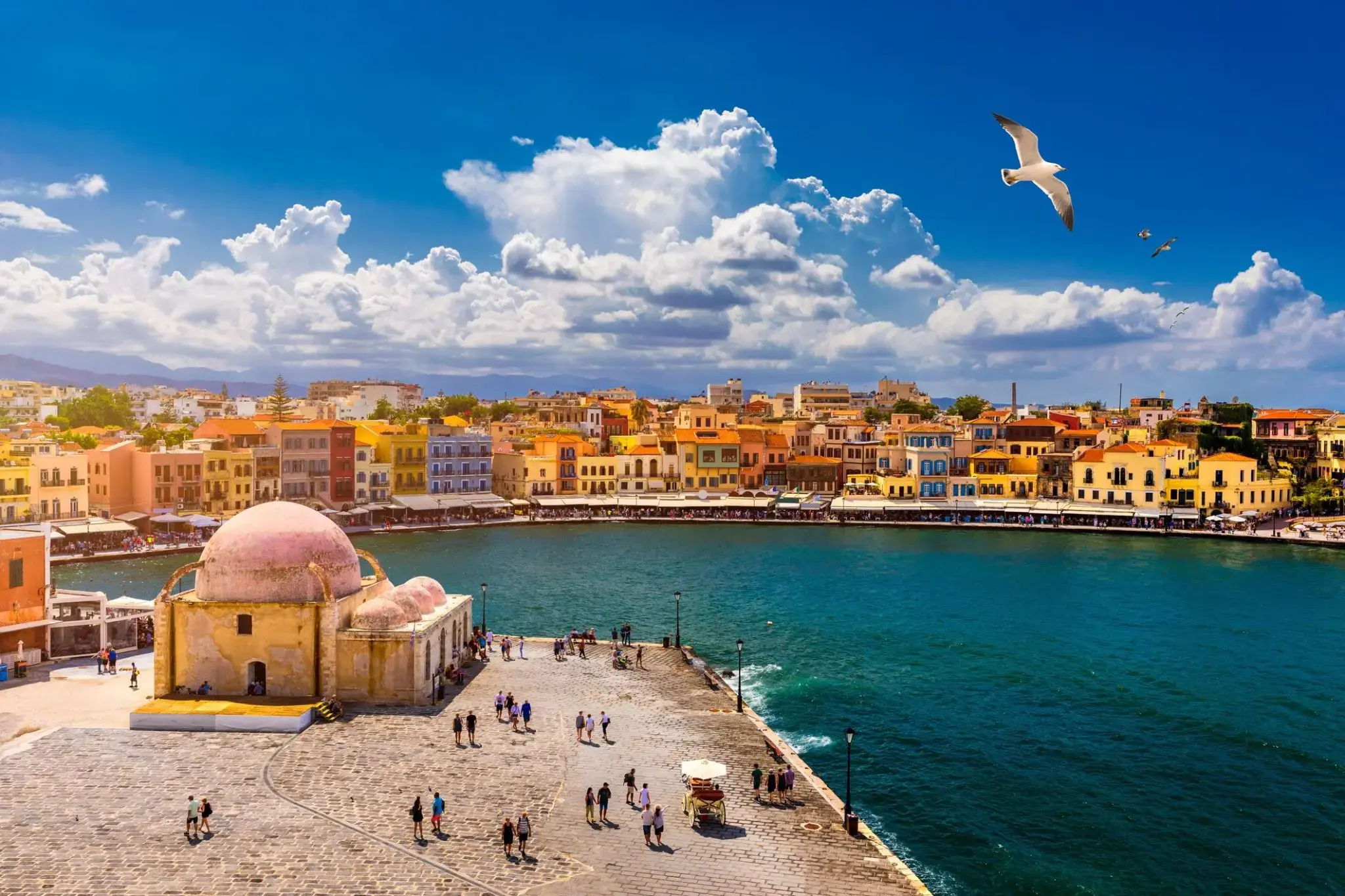
Chania (Souda), Crete — Charm and History
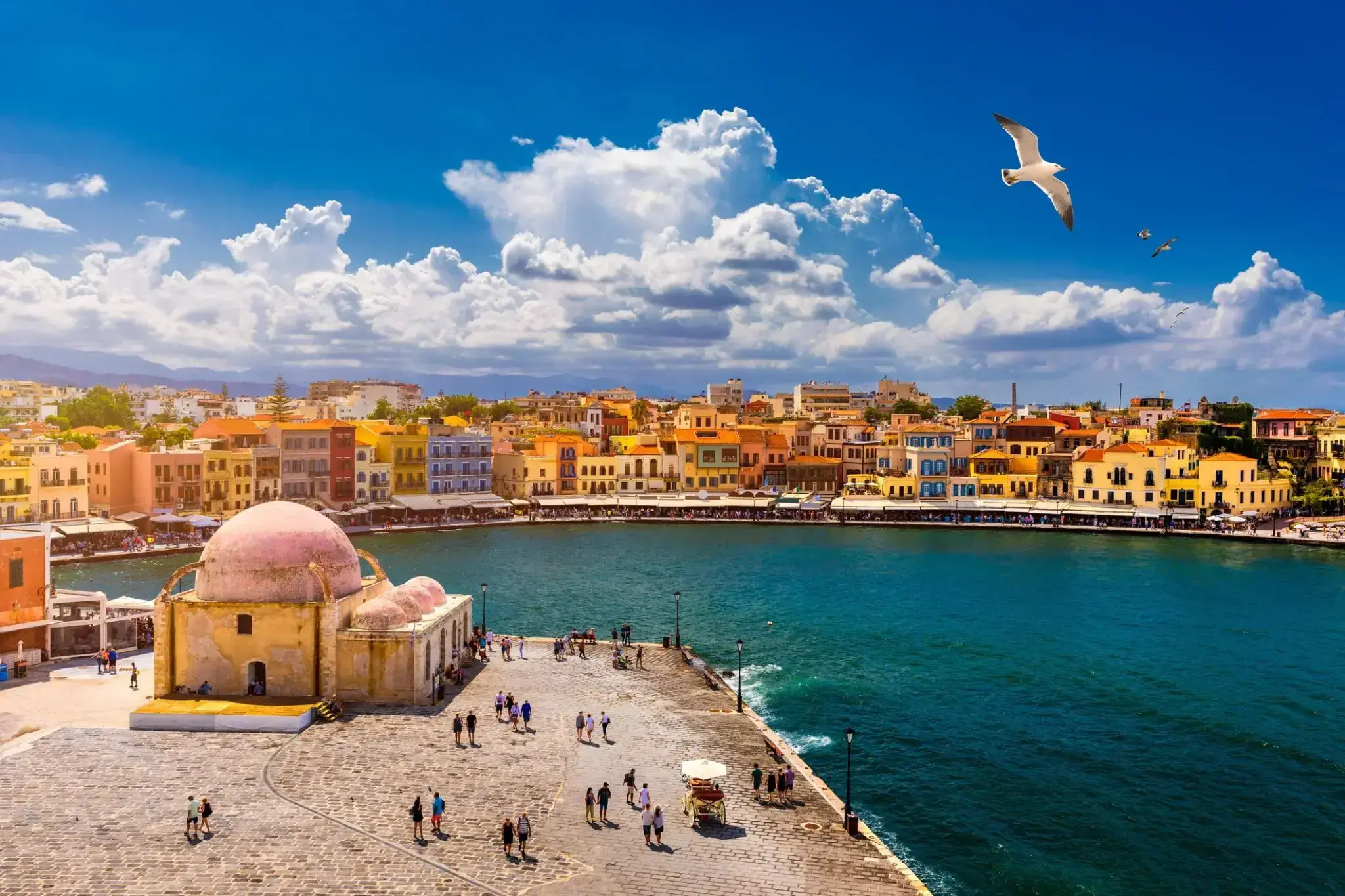
Chania, located on the northwest coast of Crete, attracts travelers with its historical atmosphere and picturesque Venetian harbor. The narrow streets, buildings, and cozy cafes create a unique charm, blending Venetian and Ottoman architectural elements.
Souda is an important seaport and ferry port situated in the bay of Souda, east of Chania. The port plays a key role in the island's transport network and is strategically important for the region. Around Chania, there are archaeological sites, including the remains of ancient cities, and natural attractions such as caves and World War II memorials.
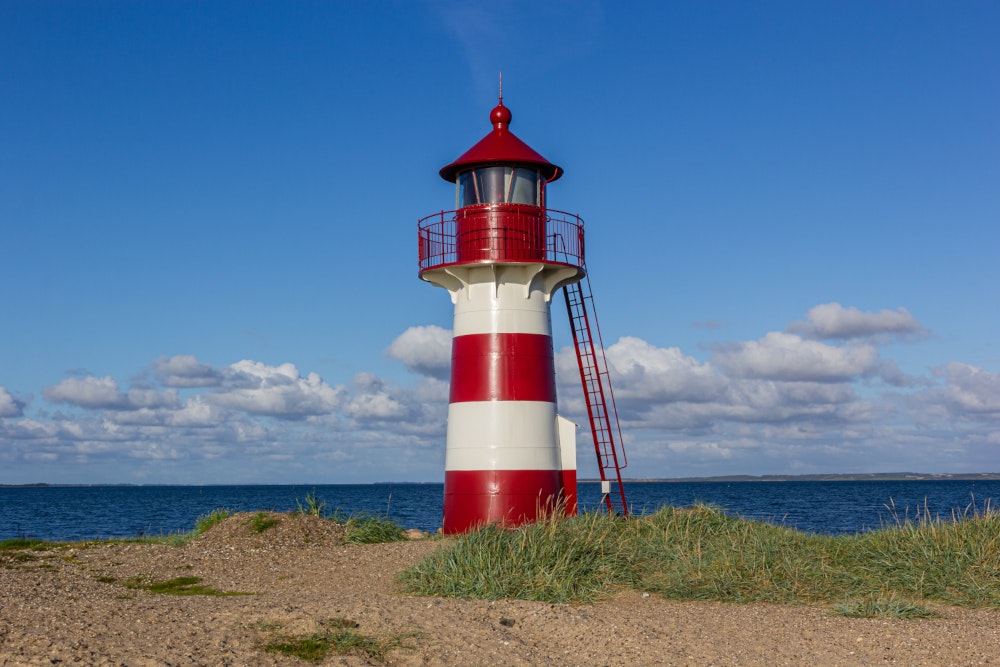
Syros is a picturesque island in the Cyclades, known for its rich history and diverse architecture. Its capital, Ermoupoli, is one of the few Greek towns where Byzantine churches stand alongside neoclassical mansions. Once Greece’s major maritime hub, the city still retains an air of elegance and cultural depth.
The island is perfect for travelers seeking more than just beach vacations. It offers peaceful coves, scenic trails, and delicious local cuisine — from fresh seafood to "lagano," a traditional bread baked with olive oil. Fun fact: Ermoupoli is home to one of the oldest theaters in Greece — Apollon, modeled after Milan's La Scala.
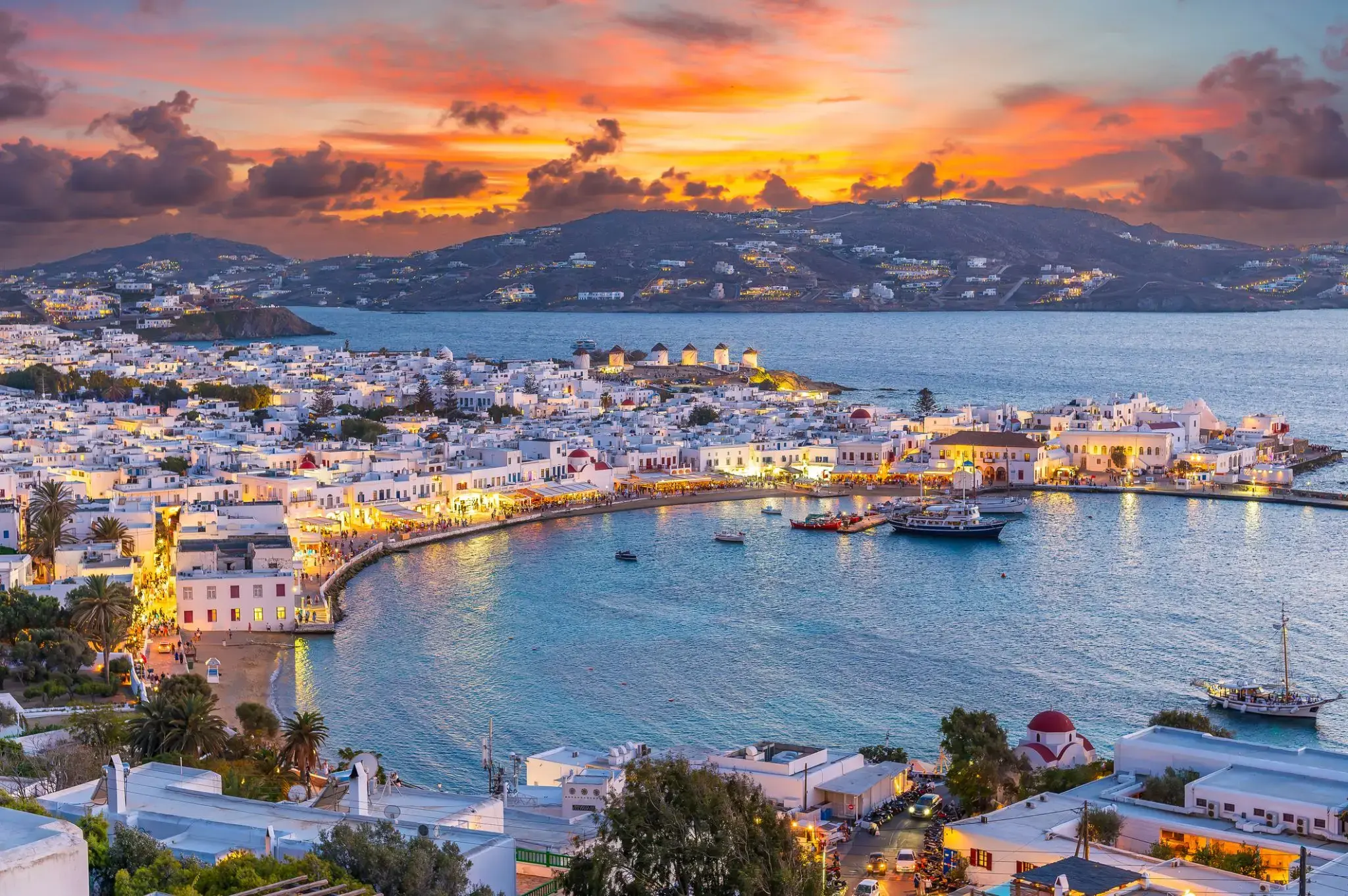
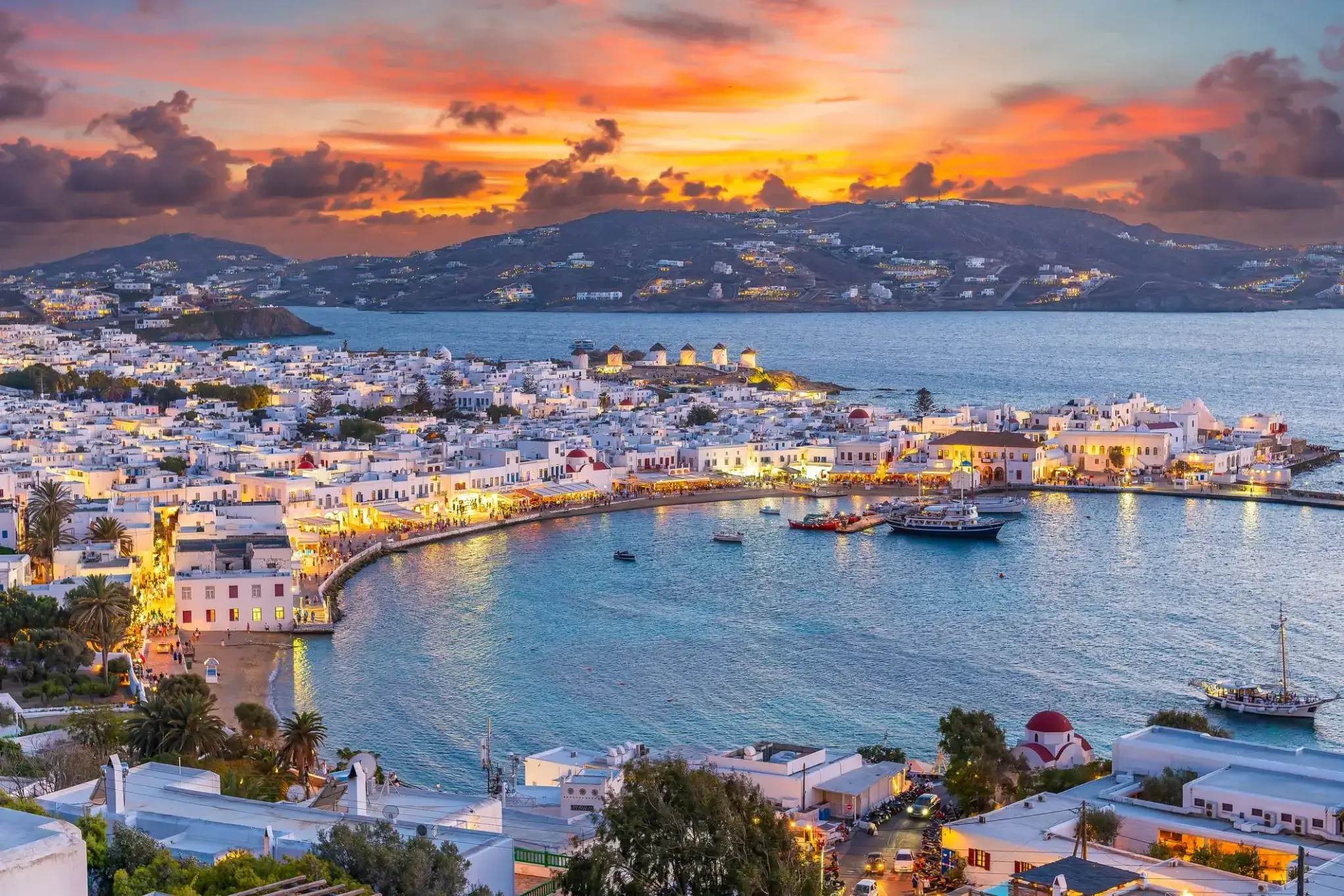
Mykonos is a Greek island, part of the Cyclades, lying between Tinos, Syros, Paros and Naxos. The island spans an area of 85.5 square kilometres (33.0 sq mi) and rises to an elevation of 341 metres (1,119 feet) at its highest point. There are 10,134 inhabitants (2011 census), most of whom live in the largest town, Mykonos, which lies on the west coast. The town is also known as Chora (i.e. the Town in Greek, following the common practice in Greece when the name of the island itself is the same as the name of the principal town).
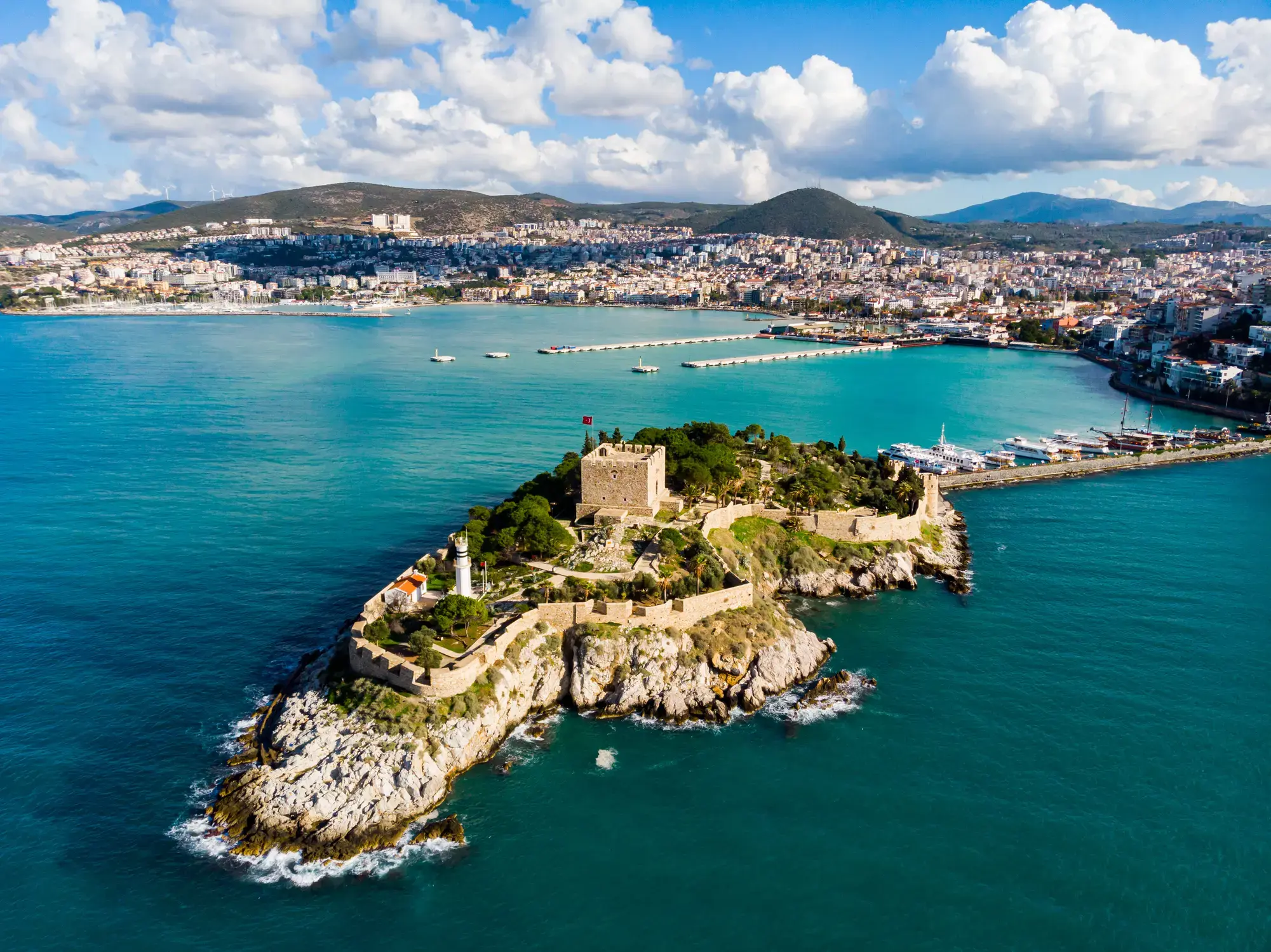
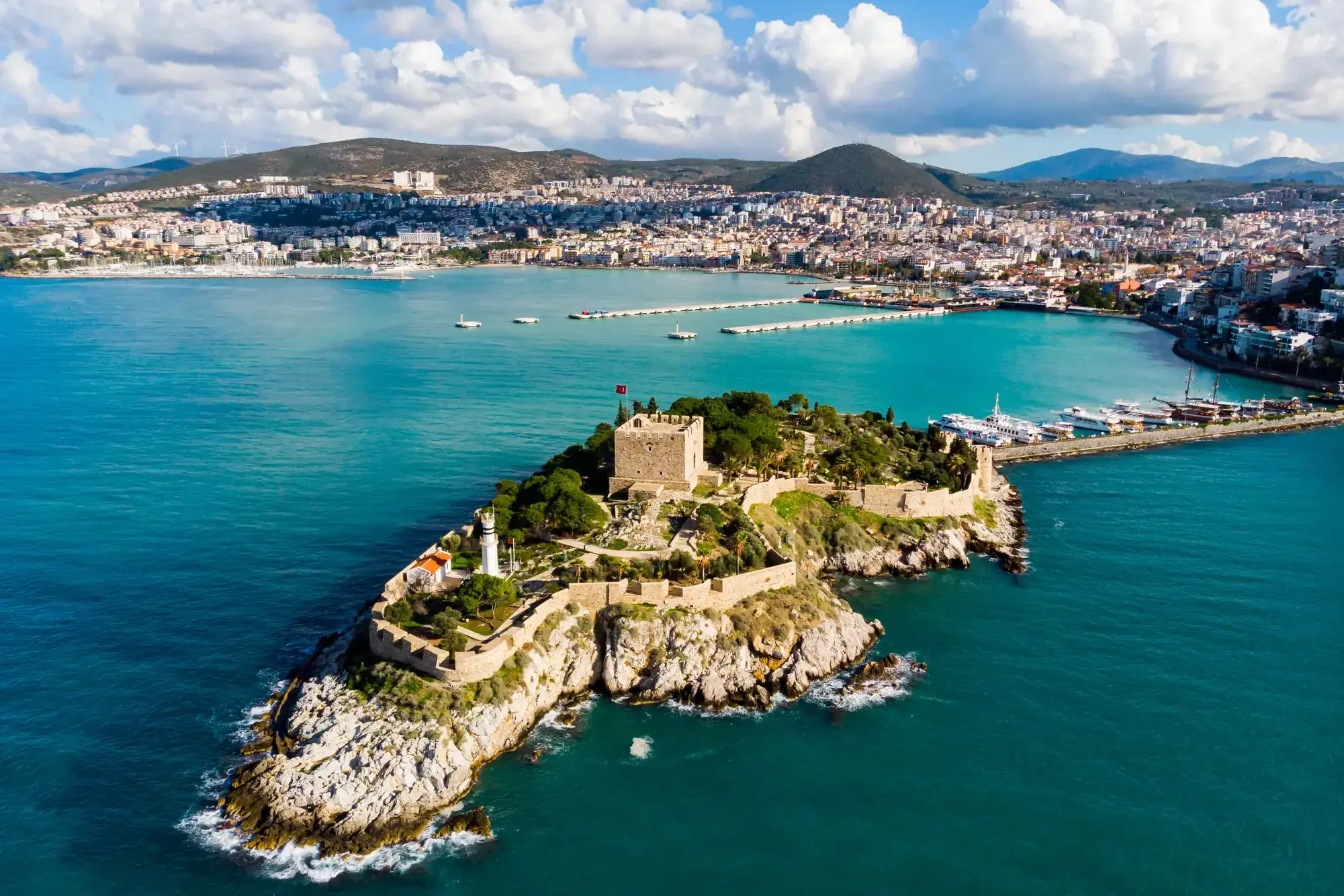
Kuşadası is a resort town on Turkey's Aegean coast, and the center of the seaside district of the same name within Aydın Province. Kuşadası is 95 km (59 mi) south of İzmir, and 71 km (44 mi) from Aydın. The municipality's primary industry is tourism.
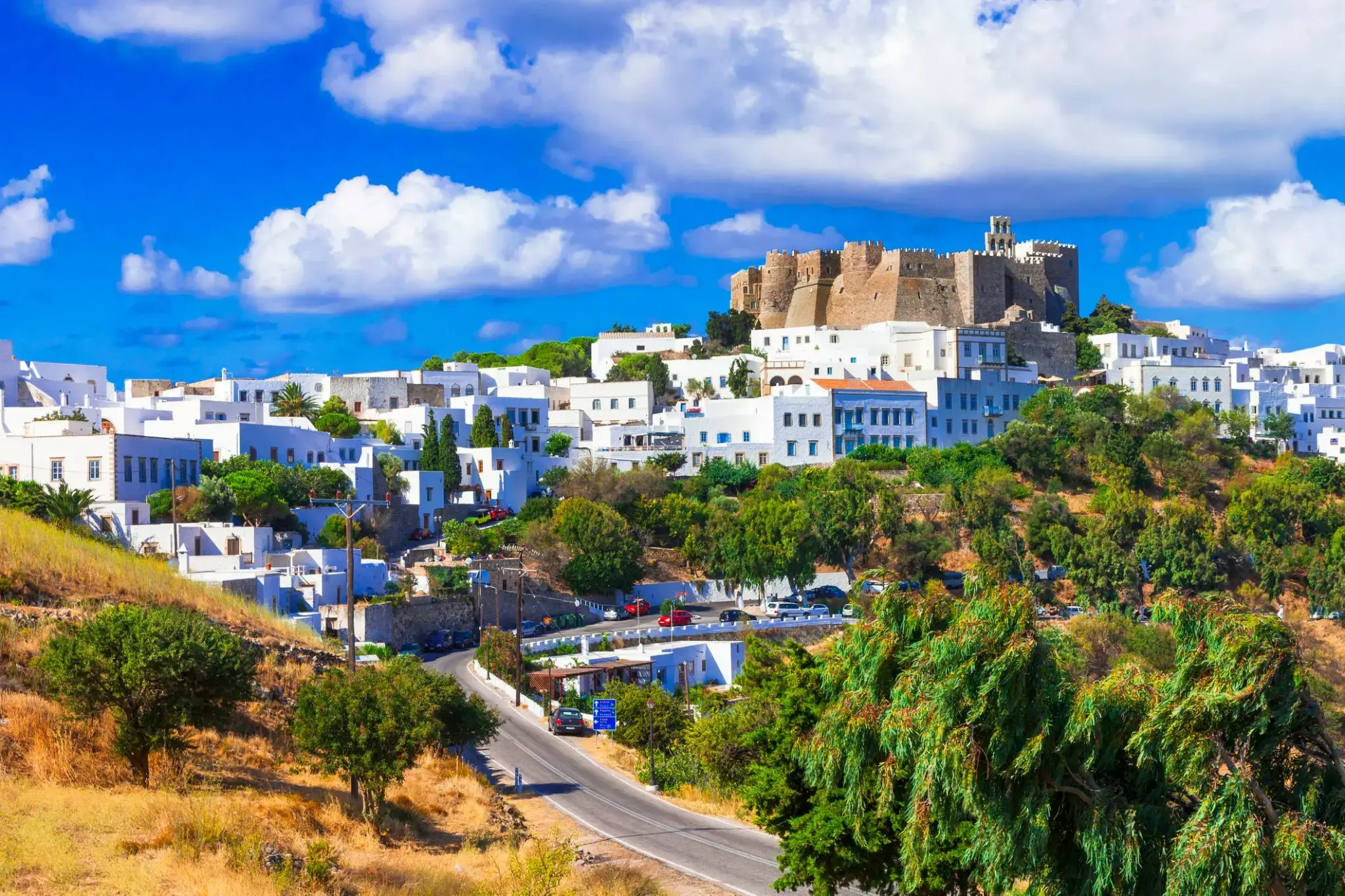
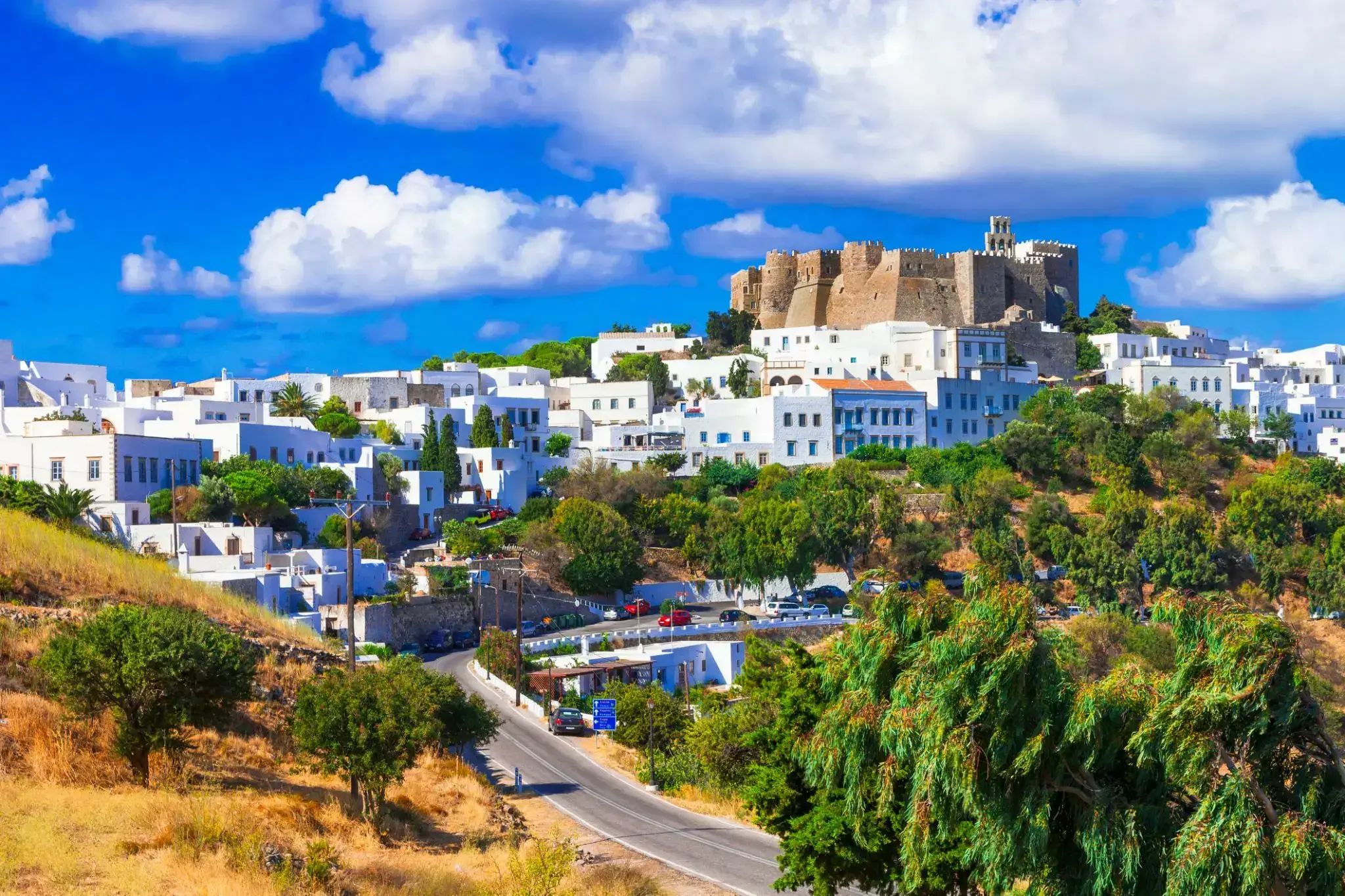
Patmos is a small Greek island in the Aegean Sea, most famous for being the location of the vision given to the disciple John in the Book of Revelation in the New Testament, and where the book was written.
One of the northernmost islands of the Dodecanese complex, it has a population of 2,998 and an area of 34.05 km2(13.15 sq mi). The highest point is Profitis Ilias, 269 metres (883 ft) above sea level. The municipality of Patmos, which includes the offshore islands of Arkoi (pop. 44), Marathos (pop. 5), and several uninhabited islets, has a total population of 3,047 (2011 census) and a combined land area of 45.039 square kilometres (17.390 sq mi). It is part of the Kalymnos regional unit.
Patmos' main communities are Chora (the capital city), and Skala, the only commercial port. Other settlements are Grikou and Kampos. The churches and communities on Patmos are of the Eastern Orthodox tradition. The mayor of Patmos is Gregory Stoikos.
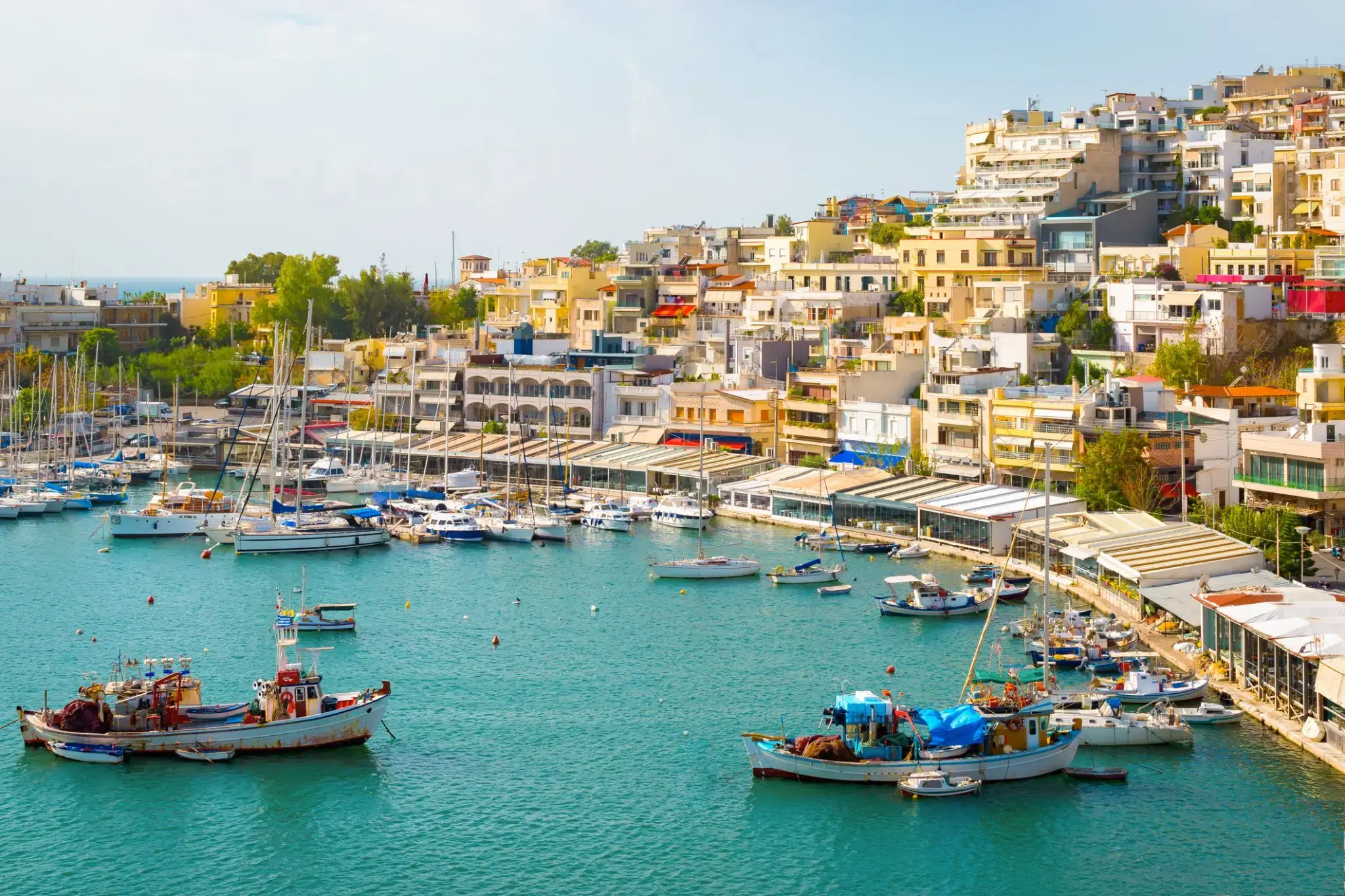
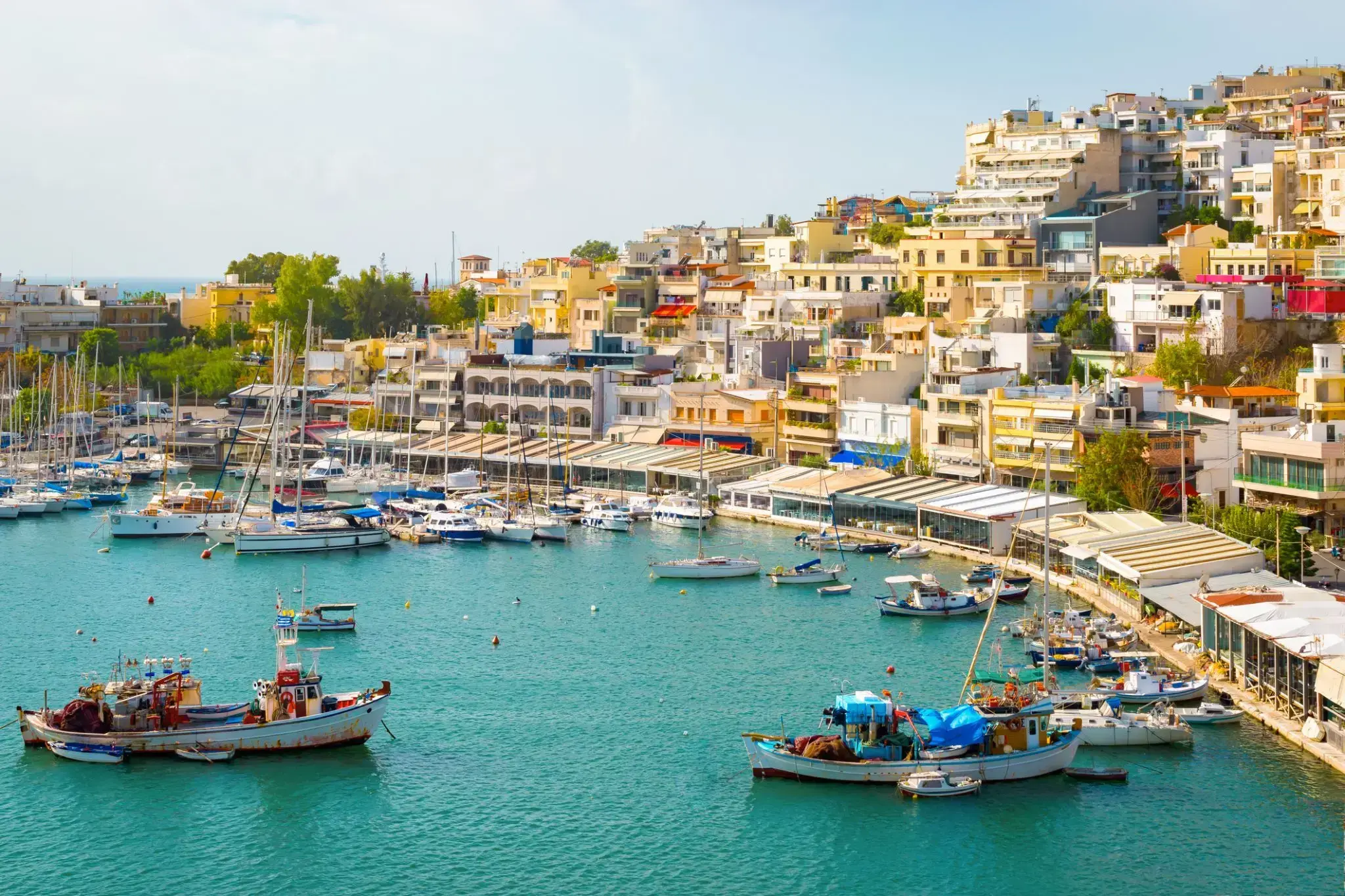
Piraeus is the gateway to Athens , which, in turn, is rightfully considered the center of the centers of the whole world, with the main attraction - the acropolis. Piraeus is an old port city serving the port of Athens, the largest port in Greece to date. Piraeus is part of the great Athens, which boasts an abundance of attractions, including unique monuments of national fine art. More than two hundred museums and galleries, including the University History Museum, the Ceramics Archaeological Museum and many others, will hospitably welcome you within their walls and familiarize themselves with the culture of this area.