

Sea cruise · 20.03.2027 – 27.03.2027 · 7 nights
Caribbean - Other Product
Cabin prices and availabilityRoute and cruise information
| Date | Port | Arrival | Departure |
|---|---|---|---|
| 20.03.2027 |
Galveston
USA
|
— | 16:00 |
| 21.03.2027 |
Day at sea
|
— | — |
| 22.03.2027 |
San Miguel de Cozumel
Mexico
|
08:00 | 17:00 |
| 23.03.2027 |
Roatan
Honduras
|
08:00 | 17:00 |
| 24.03.2027 |
Harvest Caye
Belize
|
07:00 | 17:00 |
| 25.03.2027 |
Costa Maya
Mexico
|
07:00 | 13:00 |
| 26.03.2027 |
Day at sea
|
— | — |
| 27.03.2027 |
Galveston
USA
|
08:00 | — |
-
 Day 1: 16:00
Galveston / USA
Galveston is a coastal resort city and port off the southeast coast on Galveston Islandand Pelican Island in the American State of Texas. The community of 209.3 square miles (542 km2), with an estimated population of 50,180 in 2015, is the county seat of surrounding Galveston County and second-largest municipality in the county. It is also within the Houston–The Woodlands–Sugar Land metropolitan area at its southern end on the northwestern coast of the Gulf of Mexico.
Galveston, or Galvez' town, was named after the Spanish military and political leader in the 18th century: Bernardo de Gálvez y Madrid, Count of Gálvez (1746-1786), who was born in Macharaviaya, Málaga, in the Kingdom of Spain. Galveston's first European settlements on the Galveston Island were built around 1816 by French pirate Louis-Michel Aury to help the fledgling Republic of Mexico fight for independence from Spain, along with other colonies in the Western Hemisphere of the Americas in Central and South America in the 1810s and 1820s. The Port of Galveston was established in 1825 by the Congress of Mexico following its independence from Spain. The city was the main port for the fledging Texas Navy during the Texas Revolution of 1836, and later served temporarily as the new national capital of the now independent Republic of Texas.
During the 19th century, Galveston became a major U.S. commercial center and one of the largest ports in the United States. It was for a time, Texas' largest city, known as the "Queen City of the Gulf". It was devastated by the unexpected surprising Galveston Hurricane of 1900, whose effects included massive flooding and a storm surge which almost completely destroyed and wiped out the town. The natural disaster on the exposed barrier island is still ranked today as the deadliest in United States history, with an estimated death toll of 6,000 to 12,000 people. The city subsequently reemerged during the Prohibition era of 1919-1933 as a leading tourist hub and a center of illegal gambling nicknamed the Free State of Galveston until this era ended in the 1950s with subsequent other economic and social development.
Much of Galveston's economy is centered in the tourism, health care, shipping, and financial industries. The 84-acre (34 ha) University of Texas Medical Branch campus with an enrollment of more than 2,500 students is a major economic force of the city. Galveston is home to six historic districts containing one of the largest and historically significant collections of 19th-century buildings in the U.S., with over 60 structures listed on the National Register of Historic Places, maintained by the National Park Service in the United States Department of the Interior.
-
Day 2:
Day at sea / Sea
-
 Day 3: 08:00–17:00
San Miguel de Cozumel / Mexico
-
 Day 4: 08:00–17:00
Roatan / Honduras
Roatán is an island in the Caribbean, about 65 kilometres (40 mi) off the northern coast of Honduras. It is located between the islands of Útila and Guanaja, and is the largest of the Bay Islands of Honduras.
The island was formerly known as Ruatan and Rattan. It is approximately 77 kilometres (48 mi) long, and less than 8 kilometres (5.0 mi) across at its widest point. The island consists of two municipalities: José Santos Guardiolain the east and Roatán, including the Cayos Cochinos, further south in the west.
-
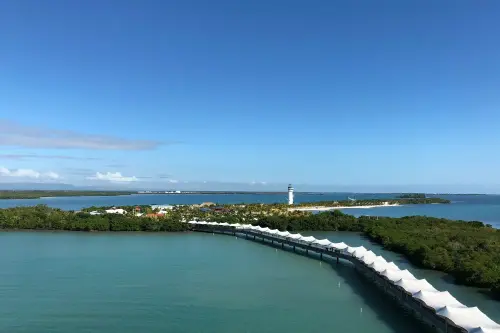 Day 5: 07:00–17:00
Harvest Caye / Belize
Harvest Caye is a private resort island off the southern coast of Belize, developed specifically for cruise passengers. Covering about 30 acres (12 hectares), the island offers everything needed for a comfortable stay: a white-sand beach, a lagoon with water sports, shopping areas, restaurants serving local cuisine, and even a nature reserve with butterflies and exotic birds. One of Harvest Caye’s unique features is that cruise ships dock directly at the island, with no tendering required — a rarity in the region.
Visitors can not only relax on the beach but also discover Belize's flora and fauna through a miniature ecosystem that includes mangrove forests. Excursions to the mainland are also available, offering the chance to explore Mayan ruins, tropical jungles, and famous cave systems. Harvest Caye blends the luxury of a curated vacation with the spirit of Central America — safe, convenient, and set against the stunning backdrop of the Caribbean Sea.
-
 Day 6: 07:00–13:00
Costa Maya / Mexico
-
Day 7:
Day at sea / Sea
-
Day 8: 08:00
Galveston / USA
Galveston is a coastal resort city and port off the southeast coast on Galveston Islandand Pelican Island in the American State of Texas. The community of 209.3 square miles (542 km2), with an estimated population of 50,180 in 2015, is the county seat of surrounding Galveston County and second-largest municipality in the county. It is also within the Houston–The Woodlands–Sugar Land metropolitan area at its southern end on the northwestern coast of the Gulf of Mexico.
Galveston, or Galvez' town, was named after the Spanish military and political leader in the 18th century: Bernardo de Gálvez y Madrid, Count of Gálvez (1746-1786), who was born in Macharaviaya, Málaga, in the Kingdom of Spain. Galveston's first European settlements on the Galveston Island were built around 1816 by French pirate Louis-Michel Aury to help the fledgling Republic of Mexico fight for independence from Spain, along with other colonies in the Western Hemisphere of the Americas in Central and South America in the 1810s and 1820s. The Port of Galveston was established in 1825 by the Congress of Mexico following its independence from Spain. The city was the main port for the fledging Texas Navy during the Texas Revolution of 1836, and later served temporarily as the new national capital of the now independent Republic of Texas.
During the 19th century, Galveston became a major U.S. commercial center and one of the largest ports in the United States. It was for a time, Texas' largest city, known as the "Queen City of the Gulf". It was devastated by the unexpected surprising Galveston Hurricane of 1900, whose effects included massive flooding and a storm surge which almost completely destroyed and wiped out the town. The natural disaster on the exposed barrier island is still ranked today as the deadliest in United States history, with an estimated death toll of 6,000 to 12,000 people. The city subsequently reemerged during the Prohibition era of 1919-1933 as a leading tourist hub and a center of illegal gambling nicknamed the Free State of Galveston until this era ended in the 1950s with subsequent other economic and social development.
Much of Galveston's economy is centered in the tourism, health care, shipping, and financial industries. The 84-acre (34 ha) University of Texas Medical Branch campus with an enrollment of more than 2,500 students is a major economic force of the city. Galveston is home to six historic districts containing one of the largest and historically significant collections of 19th-century buildings in the U.S., with over 60 structures listed on the National Register of Historic Places, maintained by the National Park Service in the United States Department of the Interior.
Please wait…
Frequently asked questions
We recommend flying in the day before the cruise begins.
- Arrive at the port 2–3 hours before departure.
- When booking an airport–port transfer, allow at least 5 hours between landing and the scheduled sailing.
Still have a question?
We'll help you choose a cruise and answer your questions.