
River cruise · 01.07.2026 – 08.07.2026 · 7 nights
Riverside Romance
Route and cruise information
- Dusseldorf
- Dusseldorf
- Niederlahnstein
- Niederlahnstein
- Loreley Passage
- Mannheim
- Strasbourg
- Strasbourg
- Rüdesheim am Rhein
- Königswinter
- Dusseldorf
- Königswinter
- Dusseldorf
| Date | Port | Arrival | Departure |
|---|---|---|---|
| 01.07.2026 |
Dusseldorf
Germany
|
— | 16:00 |
| 01.07.2026 |
Dusseldorf
Germany
|
— | 16:30 |
| 02.07.2026 |
Niederlahnstein
|
07:00 | 14:00 |
| 02.07.2026 |
Niederlahnstein
|
07:30 | 14:00 |
| 02.07.2026 |
Loreley Passage
|
— | 16:30 |
| 03.07.2026 |
Mannheim
Germany
|
07:30 | 18:30 |
| 04.07.2026 |
Strasbourg
France
|
09:00 | — |
| 05.07.2026 |
Strasbourg
France
|
— | 14:30 |
| 06.07.2026 |
Rüdesheim am Rhein
Germany
|
05:30 | 14:00 |
| 06.07.2026 |
Königswinter
Germany
|
21:00 | — |
| 07.07.2026 |
Dusseldorf
Germany
|
18:00 | — |
| 07.07.2026 |
Königswinter
Germany
|
— | 13:00 |
| 08.07.2026 |
Dusseldorf
Germany
|
— | — |
-
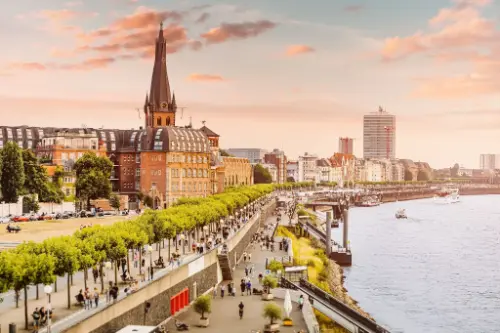 Day 1: 16:00
Dusseldorf / Germany
Düsseldorf is the capital and second-largest city of the most populous German federal state of North Rhine-Westphalia after Cologne, as well as the seventh-largest city in Germany. with a population of 617,280. At the confluence of the Rhine and its tributary Düssel, the city lies in the centre of both the Rhine-Ruhr and the Rhineland Metropolitan Regions with the Cologne Bonn region to its south and the Ruhr to its north. Most of the city lies on the right bank of the Rhine (as opposed to Cologne, whose city centre lies on the river's left bank). The city is the largest in the German Low Franconian dialect area (closely related to Dutch). "Dorf" meaning "village" in German, the "-dorf" suffix (English cognate: thorp) is unusual in the German-speaking area for a settlement of Düsseldorf's size.
-
Day 1: 16:30
Dusseldorf / Germany
Düsseldorf is the capital and second-largest city of the most populous German federal state of North Rhine-Westphalia after Cologne, as well as the seventh-largest city in Germany. with a population of 617,280. At the confluence of the Rhine and its tributary Düssel, the city lies in the centre of both the Rhine-Ruhr and the Rhineland Metropolitan Regions with the Cologne Bonn region to its south and the Ruhr to its north. Most of the city lies on the right bank of the Rhine (as opposed to Cologne, whose city centre lies on the river's left bank). The city is the largest in the German Low Franconian dialect area (closely related to Dutch). "Dorf" meaning "village" in German, the "-dorf" suffix (English cognate: thorp) is unusual in the German-speaking area for a settlement of Düsseldorf's size.
-
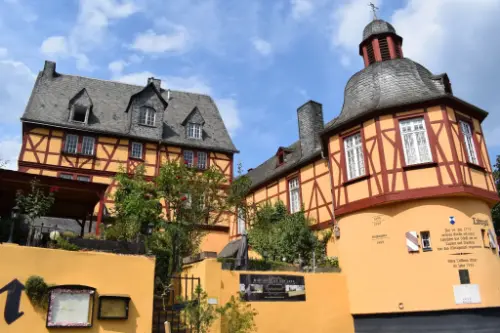 Day 2: 07:00–14:00
Niederlahnstein
-
Day 2: 07:30–14:00
Niederlahnstein
-
Day 2: 16:30
Loreley Passage
-
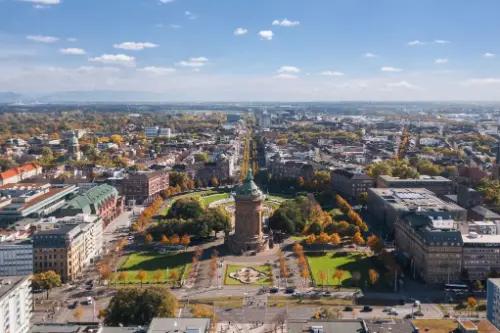 Day 3: 07:30–18:30
Mannheim / Germany
-
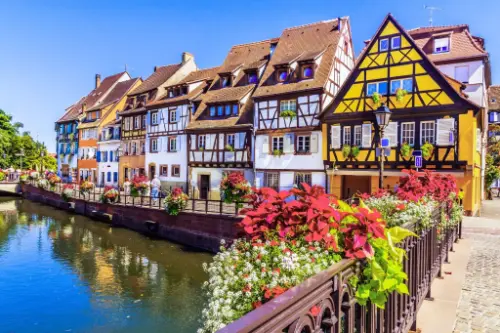 Day 4: 09:00
Strasbourg / France
-
Day 5: 14:30
Strasbourg / France
-
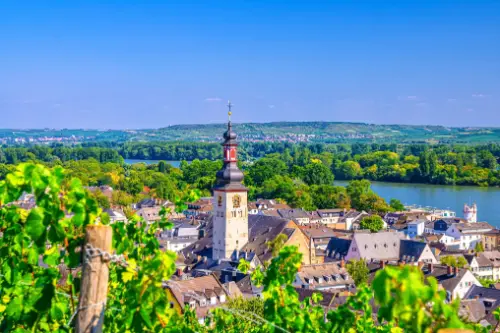 Day 6: 05:30–14:00
Rüdesheim am Rhein / Germany
-
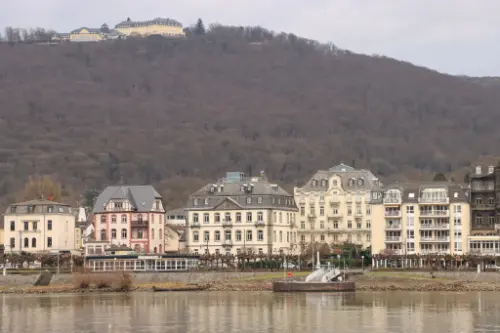 Day 6: 21:00
Königswinter / Germany
-
Day 7: 18:00
Dusseldorf / Germany
Düsseldorf is the capital and second-largest city of the most populous German federal state of North Rhine-Westphalia after Cologne, as well as the seventh-largest city in Germany. with a population of 617,280. At the confluence of the Rhine and its tributary Düssel, the city lies in the centre of both the Rhine-Ruhr and the Rhineland Metropolitan Regions with the Cologne Bonn region to its south and the Ruhr to its north. Most of the city lies on the right bank of the Rhine (as opposed to Cologne, whose city centre lies on the river's left bank). The city is the largest in the German Low Franconian dialect area (closely related to Dutch). "Dorf" meaning "village" in German, the "-dorf" suffix (English cognate: thorp) is unusual in the German-speaking area for a settlement of Düsseldorf's size.
-
Day 7: 13:00
Königswinter / Germany
-
Day 8:
Dusseldorf / Germany
Düsseldorf is the capital and second-largest city of the most populous German federal state of North Rhine-Westphalia after Cologne, as well as the seventh-largest city in Germany. with a population of 617,280. At the confluence of the Rhine and its tributary Düssel, the city lies in the centre of both the Rhine-Ruhr and the Rhineland Metropolitan Regions with the Cologne Bonn region to its south and the Ruhr to its north. Most of the city lies on the right bank of the Rhine (as opposed to Cologne, whose city centre lies on the river's left bank). The city is the largest in the German Low Franconian dialect area (closely related to Dutch). "Dorf" meaning "village" in German, the "-dorf" suffix (English cognate: thorp) is unusual in the German-speaking area for a settlement of Düsseldorf's size.
Still have a question?
We'll help you choose a cruise and answer your questions.